The game has two titles, and they say two different things. In Chinese it is The Sixteen Sounds of Yanyun - the lament of a lost land and the cries of the people after it fell. The English title carries no place at all. It points at the player.
That meaning sits hidden until the Hexi finale, when an NPC finally calls you by that name. Everything before it has been preparing the moment.
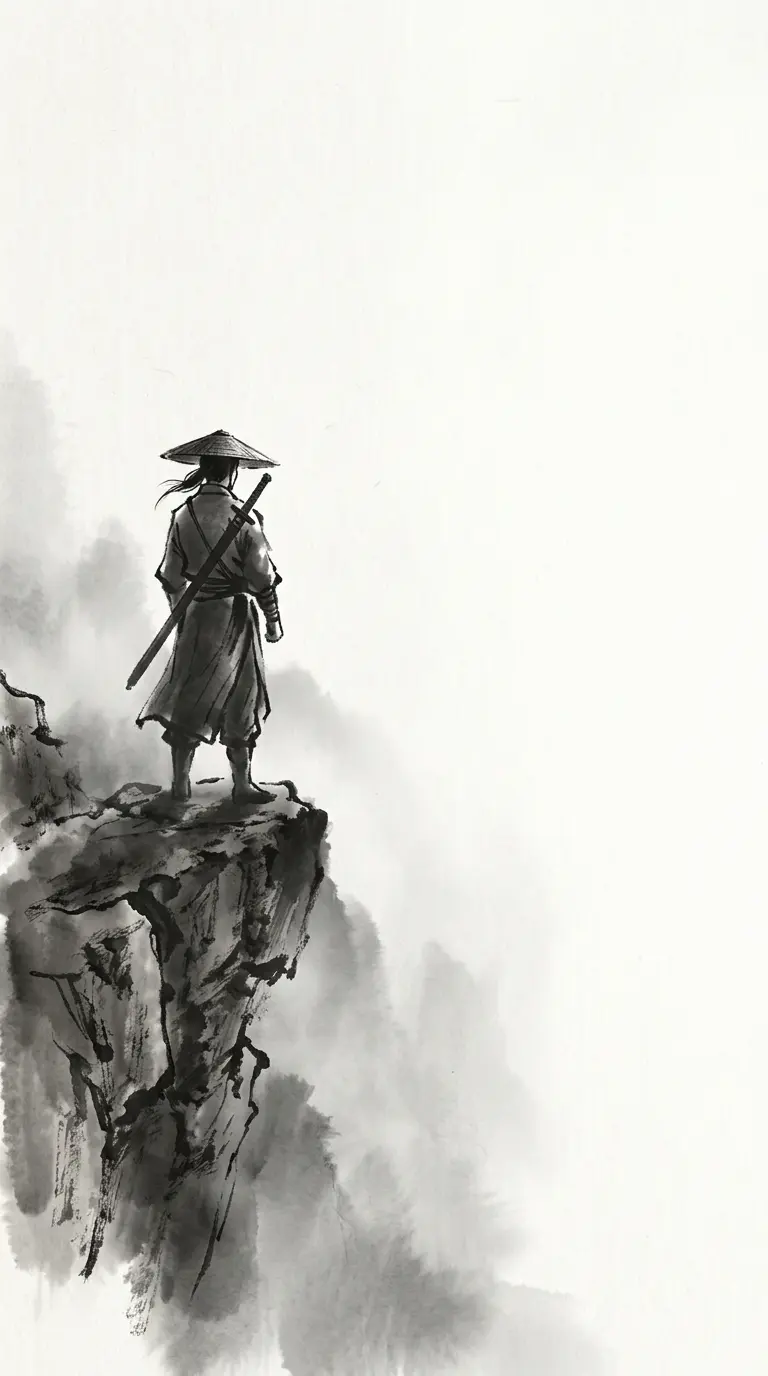
[spoiler]Hexi is the past. By the time you arrive, the people whose stories you are inhabiting are already gone, and the last map of the expansion is not earth at all - it is canvas. Every oddity collected along the way is a fragment of a mural. You have been walking through a painting.
The painter who made it lost his closest friend, his country, and his home on a single day. He spent the rest of his life painting that day, as if the act of repainting could keep his friend alive. That refusal is what traps the finale in a time loop. You repeat the same tragic day, learn slightly more of the truth each pass, and discover that no amount of knowledge lets you save the people standing in front of you. The loop is not a supernatural rule. It is one man's grief refusing to release the world.
Most games hand the player information so they can win - knowledge becomes power. Here, knowledge becomes weight. You are not the saviour. You are the one who survives the painting, gathers what it cost, and carries it forward.
That is where the title resolves. Wind moves through borders no army can cross. It carries kites, voices, the unfinished sentences of the dying. It touches everything but belongs to nothing. You are the only figure inside the painting that does not belong to it. Everyone in Hexi has been waiting - not for a conqueror, but for the wind that lifts their memory beyond the day they died.
The painter himself is finally found in a cave beneath your home, having quietly passed away. He lies down in the gap of a crescent and completes it. Across Hexi every moon-shaped chest is broken; every story is shaped by something left unfulfilled. His death is the one shape that closes. He becomes the missing piece - the torch that has now been passed.
The same logic surfaces much earlier, in a small Jade Gate Pass vignette. A naan seller and his old dog cross the desert sharing every piece of bread evenly. When the man collapses, his last thought is for the dog to run and live. Villagers later tell him the dog dragged them back to save him, and is now dying. The man sits beside him until the tail stops moving. After that, he loves sleeping. Every night, he meets his friend again.
True friends meet again in dreams - the painter's line, anticipated by an NPC most players never linger on.
This is also what the Dark Surge layer keeps mirroring. On the surface, a general protects a border pass; in the reflection, a different general protects Qinghe against invaders. On the surface, a leader passes a legendary treasure to his successor; in the reflection, Wang Qing passes it to Jiang Yan. Different stories, same instruction: the homeland is built from personal bonds, not abstract loyalty. The collective is assembled out of small, private acts of remembering.
Maybe that is why the friend in the painting has a blurred face. He is not a single person. He is whoever you trust enough to carry forward next.[/spoiler]
So the answer to the title is small and personal. Where Winds Meet is not a coordinate. It is the moment one life lifts another's memory across the borders that grief cannot cross by itself. The Sixteen Sounds of Yanyun tells you what was lost. The English title tells you how memory survives - because someone refuses to let another be forgotten, and someone after them inherits the refusal.
*Based on analysis by [WWM Girl (Goose Girl Stories)](https://www.youtube.com/@GooseGirlStories).*